Florian Hemme Florian Hemme

The Leona: How a Lockhart Boutique Went From Off the Map to Top 7 on Google

A year of mobile-first website rebuild, SEO, and conversion work later, the property sits at Google position 6.8, pulls 117K annual impressions, and grew revenue +475% year over year. Mobile rebuild did most of it.
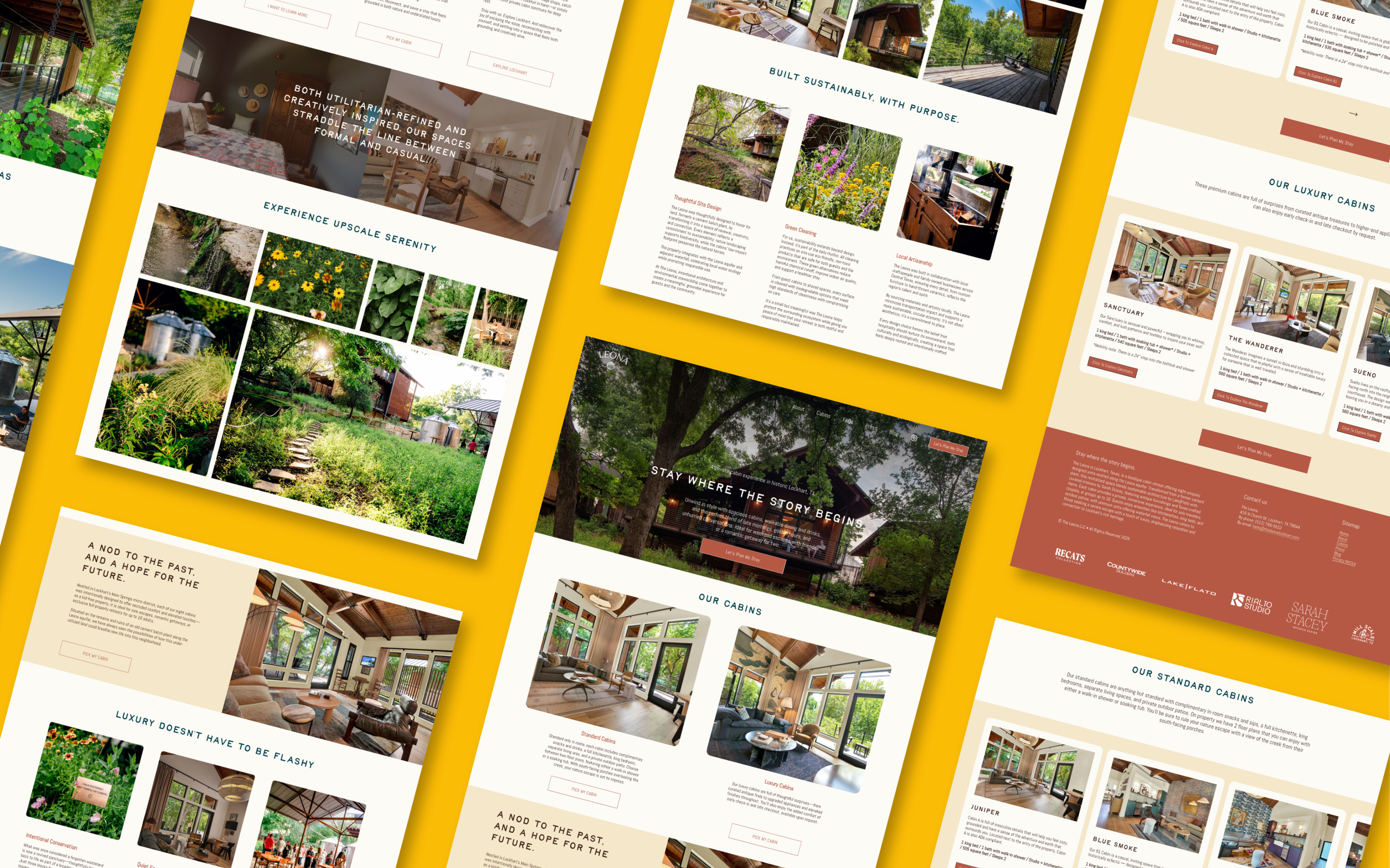
The Leona is a boutique hotel in Lockhart, Texas, a short drive from Austin. Independent property, distinctive identity, the kind of small-town Texas hospitality that punches above its weight when the digital front door is built right. That is what we fixed.

The Starting Point

We took on The Leona's website in the spring of 2025. Before our engagement, the property had little to no indexed presence on Google. The site was not pulling search traffic of any consequence, the booking flow was leaving most visitors on the page instead of in the calendar, and the digital front door was not doing the work the actual front door does every weekend.

A year of work later, here is what the same property looks like online.

What We Did

We did what we always do on a hospitality engagement: rebuild the foundation around how guests actually search, browse, and book, with zero budget for ads and zero need to buy our way out of it. From the first week, the work covered:

Website redesign and full brand rebuild. We rebuilt the digital home from scratch, with the same discipline we bring to every boutique hotel project: clear room types, real photography, intentional typography, and a unified visual system across every page. The identity work had to match the property. The Leona has a distinct aesthetic and a clear sense of pace, the kind of slow, considered stay travelers are actively looking for right now. The site needed to communicate that before a guest read a single word.

On-page SEO and meta foundation. Title tags, meta descriptions, heading hierarchies, image alt text, schema markup (Hotel, LocalBusiness, FAQ), sitemaps, robots, canonicals. The technical housekeeping that nobody sees, and the work that decides what Google surfaces in the first place.

Keyword and search-intent mapping. Travel intent around Lockhart splits into clear layers: weekend getaways near Austin, romantic stays within driving distance, dining-and-stay trips to the BBQ capital. We mapped the searches that turn idle planning into confirmed reservations, and built content toward them.

Blog and content engine. Local guides, things to do nearby, neighborhood features, planning content. The kind of articles a traveler runs across months before they ever search the property by name.

Conversion design and booking flow. Every primary action tightened. Booking button above the fold. Reservation widget persistent. Trust signals near the decision. Microcopy rewritten for a guest on a phone during the planning phase.

We did not run a backlink campaign.

Mobile: Where the Real Work Happened for The Leona

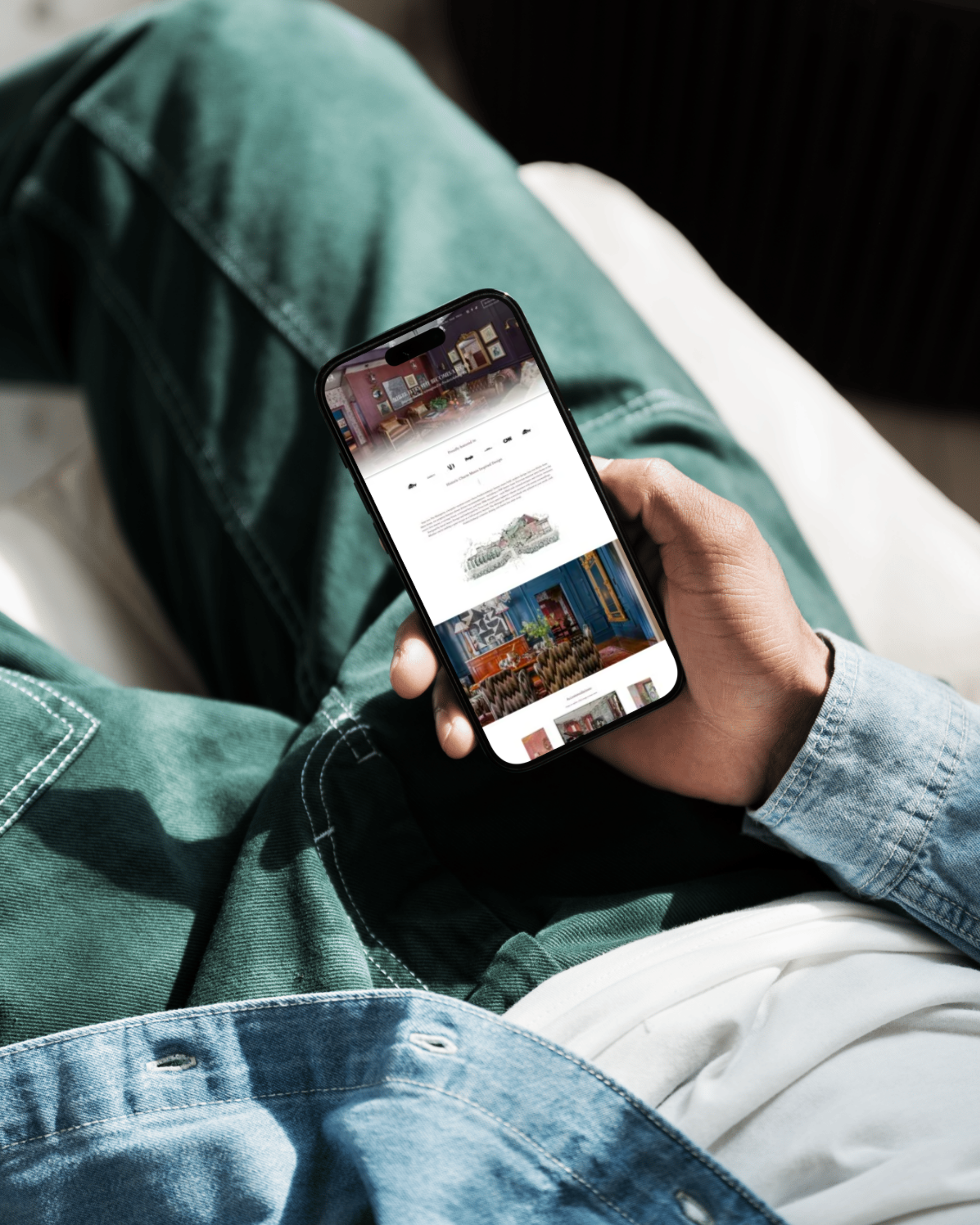
The Leona is a drive-to, weekend-stay property. Its guests do not sit at a desktop and plan a trip two months out. They see an Instagram post on a Tuesday, search Lockhart on their phone at 9 PM, browse rooms from the couch, and book from the kitchen counter on Thursday morning. Mobile is not a secondary surface for this client. It is the entire foundation.

We treated mobile as primary from day one. Here is what that meant in practice for The Leona.

Thumb-zone architecture and sticky conversion layer. Every primary action on The Leona's mobile site sat inside the natural thumb arc, not at the top of the screen where an iPhone user has to stretch. The booking button, the date picker, the call to the property, all placed where a thumb naturally lands in one-handed use. Below the fold, a persistent reservation widget followed the guest through every page, including the long-form blog posts. The booking action was never something the guest had to go find. It was always where the thumb already was.

One decision per screen, full booking flow rebuilt for the device. The desktop booking experience was elegant. On mobile, we collapsed it into a clean sequence of single-decision screens: choose a room, choose dates, choose guests, confirm. One job per screen. One obvious next step. The mental load of completing a reservation dropped step by step. For a property like The Leona, where most guests are booking for the first time, that flow is what converts curiosity into a confirmed stay.

Speed treated as a brand decision, not a developer task. Boutique hotel sites are slow. Heavy hero videos, uncompressed gallery photography, third-party scripts the property forgot it installed, a booking engine that loads its own kitchen sink. Every additional second of mobile load time costs measurable bookings in hospitality. We ran the Leona through a real performance discipline: image compression pipeline, modern formats, hero assets sized for the screens they actually render on, scripts audited and cut to only what earned its weight. The mobile site hit fast Largest Contentful Paint scores on mid-tier devices, which is where most of The Leona's booking traffic actually lives.

Tap targets, spacing, and readability, the small things that decide sales. Forty-eight pixel minimum tap targets. Form fields labeled above the input, not inside it, so guests never lost their place. Body copy in sizes readable on a sunlit screen. Inputs that did not shrink the viewport when the keyboard opened. Reservations got shorter. Drop-off at the checkout got tighter.

Mobile-first booking flow, written for the device. The reservation engine was rebuilt for the phone rather than ported to it. Date pickers became native-feeling wheels. The guest count selector became a large, confident control. Trust signals (cancellation policy, recent reviews, secure checkout) sat near the moment of decision, not buried in a footer. The microcopy at every step got rewritten for someone booking from a coffee shop on a Tuesday morning.

Core Web Vitals as a ranking input. Google's mobile-first index treats mobile performance as a ranking signal. We treated it the same way. Largest Contentful Paint, Cumulative Layout Shift, Interaction to Next Paint: all paid attention to. The mobile work was always the ranking work. They were never separate problems.

The result is that a guest who finds The Leona on their phone at night can browse the rooms, read the story of the property, check availability, and confirm a reservation without ever putting the phone down. The mobile rebuild is the reason more of them finish.

What Changed on Google

A year of organic work, no paid ads: the Leona went from page-two-and-a-half to top seven on average. Impressions scaled dramatically, the property now appears in 117,000 searches per year, and recent quarters show consistent top-10 placement across an expanding set of queries. The click-through rate has compressed as visibility expanded, a normal pattern at this stage of growth. More searches surfaced, broader query set, traffic efficiency follows.

What It Built at the Property

Same property, same rooms, same team: total revenue up +475%, room revenue up +437%, occupancy up from 2.18% to 15.69%, occupied nights up +448%, unique reservations up +413%, RevPAR up +387%, online booking conversion up from 0.94% to 2.88% (+206%), and annual daily visitor volume up +310%. Early April 2026 already outperformed the full Q1 quarter on revenue, occupancy, and RevPAR, and the curve is still climbing.

The Pattern

Boutique hotels rarely fail at the product. They tend to fail at the front door of the internet, in the moment a traveler searches and the property is simply not there.

The Leona case is the same pattern we see across hospitality. The fix is not a bigger ad budget. It is a website (especially a mobile website) built to read well to both the guest and the search engine, content that answers the questions travelers actually ask, a brand that feels like one place, and a booking flow that does not waste the visit. Once those pieces are right, the rankings move, and the calendar fills.

We do this because we love the work and because boutique properties deserve owners at the keyboard, not a junior account manager. If you run one and it feels harder than it should, that is usually where the work starts.

Let's Audit Your Property

If your boutique hotel is the one Google has effectively forgotten, or if the conversion on the site you already paid for is not where it should be, that is exactly where our work starts.

Read More
Florian Hemme Florian Hemme

The Menagerie: Where the Mobile Rebuild Actually Moved the Numbers

Breezepoint rebuilt The Menagerie's mobile experience first, and the rest of the property's year-over-year growth followed. Average Google position moved from 21.3 to 11.8, Google impressions grew 510%, and total revenue was up 217% over the prior year. All with paid advertising turned off. The mobile work was the ranking work. They were never separate problems.
The full case study for The Menagerie, including the brand rebuild, the SEO foundation, the content engine, and the year-over-year numbers, lives at here. Consider this the deep dive on the single piece of that work that did some of the heaviest lifting: the mobile rebuild.

The Engagement, in One Paragraph

Breezepoint took over The Menagerie's website on August 15, 2025. The boutique hotel was sitting at an average Google position of 21.3 across the searches that mattered, with about 37,400 Google impressions and 2,750 clicks over the prior nine months. The site had not been refreshed in years. Meta tags were inconsistent. The booking engine sat behind weak taps. The hotel was paying Google every month to compensate. From September 2025 onward, paid advertising was turned off. We rebuilt the website top to bottom, fixed the meta, mapped the search landscape, started a real blog, unified the visual brand, and tightened the booking flow. No backlink campaign. Every result below came from the work done on the site itself.

The Google numbers from that nine-month-on-nine-month comparison (Feb 22, 2025 – Aug 14, 2025 vs Aug 15, 2025 – June 21, 2026):

  • Clicks: 2,750 → 6,800 (+147%)

  • Impressions: 37,400 → 228,000 (+510%)

  • Average position: 21.3 → 11.8 (+9.5 spots)

Nowhere on that list was paid traffic. Which brings us to the work that quietly made all of it possible.

The Mobile Rebuild: Where Boutique Hotels Bleed Money

A guest searching for a hotel at 10:47 PM from a king bed in another hotel is not browsing. They are deciding. They are price-checking, comparing neighborhoods, reading reviews without scrolling past them, and trying to book a room on a screen that fits in one hand. Every pixel of friction on mobile is a reservation lost.

Most boutique hotels still treat the website like a desktop brochure and the mobile version like a smaller, slightly cropped brochure. That is the wrong instinct. Google has been indexing the mobile version of every page as the canonical version since 2019, and the guest makes their decision on the phone 70% of the time in hospitality. The phone is the primary surface. Treating it as secondary is the most expensive mistake a hotel can make online.

Here is how we treated it as primary.

Architecture Built Around the Thumb

Adult thumbs reach a specific arc across a phone screen. The corners and the top edge are expensive. The bottom-center is easy. We laid out The Menagerie mobile so every primary action, the booking button, the date picker, the room selector, the call to the front desk, sat inside the natural thumb arc. Nothing the guest had to do required a stretch, a two-handed grip, or a hunt across the page.

Below the fold, a persistent reservation widget followed the guest down the page. The action was always one tap away, even deep into a 2,000-word blog post about nearby restaurants. The guest never had to scroll back to the top. The booking was always where the thumb was.

One Decision Per Screen

The desktop site can carry a hero, a sidebar, three columns, a popup, and still feel elegant. A phone cannot. We collapsed every flow into single-decision screens on mobile:

  1. Choose a room.

  2. Choose dates.

  3. Choose guests.

  4. Confirm.

One job per screen. One obvious next step. No secondary choices competing for attention. No "you might also like" widgets pulling the guest sideways. The mental cost of completing a reservation dropped step by step. What used to feel like a 12-tap chore became a 4-tap confidence move.

Speed Treated as a Design Decision, Not a Developer Chore

Boutique hotel sites are slow. Heavy hero videos, uncompressed photography, fourteen tracking scripts, a booking engine that loads its own kitchen sink. We treated page speed as part of the brand, not engineering follow-up.

Hero assets got sized for the screens they actually appeared on, not the largest theoretical device. Images went through a real compression pipeline with modern formats. Scripts got audited and cut, the third-party baggage trimmed to only what earned its weight. The mobile site hit fast Largest Contentful Paint scores on mid-tier devices, the kind most of The Menagerie's guests actually carry. In hospitality, every additional second of mobile load time costs measurable bookings. We refused to pay that tax.

Tap Targets, Spacing, and Readability

The smallest details are never small on mobile. Forty-eight pixel minimum tap targets, the standard that respects how fingers actually press a screen. Form fields labeled above the input, not inside it, so a guest who tapped the field and lost their placeholder still knew what they had been typing. Body copy in fonts the eye can actually read on a sunlit screen. Inputs that did not shrink the viewport when the phone's keyboard opened, because most hotels still do this and it is quietly infuriating.

The Sticky Conversion Layer

On mobile especially, the difference between a visitor and a reservation is often a single missing affordance. The Menagerie got a persistent booking bar that followed the guest down the page, plus contextual CTAs that surfaced at the natural intent moments: after viewing a room, after scrolling past the gallery, after reading two blog posts. The booking was never the thing the guest had to go find. It was the thing that was already there.

Core Web Vitals as a Ranking Input

Google's ranking model now cares about how a page feels on a phone, not just what it says. Largest Contentful Paint, Cumulative Layout Shift, Interaction to Next Paint: we treated them as ranking factors, because they are. The site stopped fighting its own weight and started showing the metrics that Google's mobile-first index rewards. The mobile work was always the ranking work. The two were never separate problems.

What the Mobile Work Bought

Same booking engine. Same rooms. Same property. Nine months later. Comparing August 15, 2025 through May 5, 2026 to the same window the prior year:

  • Total revenue: +217%

  • Room revenue: +219%

  • Occupied nights: +229%

  • Unique reservations: +98%

  • RevPAR: +209%

  • Average daily room revenue: +219%

None of it bought. All of it organic. And a meaningful share of the lift can be traced back to treating the phone as the primary surface the work was being done on.

Let's Audit Your Property

If your boutique hotel is the one paying Google every month just to stay visible, or if the conversion on the site you already paid for is not where it should be, that is exactly where our work starts.

Read the full Menagerie case study at here or schedule a call with us today.

Read More
Florian Hemme Florian Hemme

The Menagerie: From Invisible on Google to Fully Booked Organically

When Breezepoint took on The Menagerie in August 2025, the hotel was averaging position 21 on Google and paying for ads just to stay visible. Nine months later, with no backlink campaign and paid ads off from September, the site pulled in 228,000 Google impressions and grew total revenue 217% year over year. Same rooms. Same booking engine. Different window.

The Client

The Menagerie is a boutique hotel: independent, character-driven property, room count and ADR left out of this case study for confidentiality. 

The Starting Point

We took on The Menagerie's website on August 15, 2025.

Before that handover, the property was paying for Google Ads just to stay visible. The site had not been refreshed in years. There was no content engine. Meta tags were inconsistent. The booking engine sat behind weak taps. Mostly, the hotel existed online the way small independent hotels often do: technically live, practically invisible to anyone searching.

Average Google ranking across the queries that mattered sat around position 21.3, with only 37,400 impressions over the prior nine months and roughly 2,750 clicks in the same window. The site was a card in a stack of a thousand cards.

What We Did

We did not buy our way out of that hole. From September 2025 onward, paid advertising stayed off. Every minute of the work was on the property itself: design, brand, code, content, conversion. The full surface area we covered:

Website redesign and user experience. We rebuilt the digital home from the ground up. Every page was redesigned around how guests actually shop for a boutique stay: clear room types, strong photography, real descriptions, fewer doors between landing and reservation. The new layout is mobile-first, because that is where most hotel searches now happen, and the booking flow was shortened so a guest two scrolls deep could confirm a room in seconds, not minutes.

Cohesive brand and visual identity. The visual system got cleaned up and made consistent across every page. Typography, color palette, photography treatment, button styling, iconography, spacing: one unified system applied to the homepage, the rooms, the blog, the booking flow. The site started to feel like one place with a point of view, which is what boutique hotels need to communicate independent character online.

Meta work and on-page SEO. Every title tag, meta description, heading hierarchy, and image alt text was audited and rewritten to match how travelers actually search. Schema markup went in (Hotel, LocalBusiness, FAQ, where it fit). Sitemaps, robots files, and canonical tags were cleaned up. Technical housekeeping that nobody sees is the work that decides what Google surfaces in the first place.

Keyword research and search strategy. We mapped the search landscape around the property and around the destination: what travelers ask months before they book, what they ask during planning, what they ask in the final decision week. The strategy leaned into long-tail, intent-rich queries and local search, not branded defense. We targeted the searches that turn idle planning into confirmed reservations.

Blogging and content engine. A real editorial calendar went live. Local guides, things to do nearby, neighborhood deep-dives, seasonal travel pieces, planning content: the kind of articles a traveler runs across three months before they ever search for the hotel by name. Each post linked internally to the booking pages that mattered, so the blog worked as both a magnet and a pipeline straight into the reservation flow.

Calls to action and conversion design. Every primary action on the site got a clearer, more confident treatment. Booking buttons sat above the fold. A sticky reservation widget followed the guest down the page. Trust signals sat near the decision points. Microcopy at the checkout got tighter. The path from arrival to confirmed reservation shrunk at every step.

Technical and performance hygiene. Behind the design and content, page speed, image weight, accessibility, mobile rendering, and Core Web Vitals all got attention. The site stopped fighting its own design and started getting out of its own way.

We did not run a backlink campaign, and we did not need to. Every result below came from the work above.

What Changed on Google

Compare the nine months before our engagement (February 22, 2025 through August 14, 2025) to the nine months during and after (August 15, 2025 through June 21, 2026):

The impression number is the headline. The Menagerie went from showing up in Google roughly 37,000 times in nine months to showing up 228,000 times in the next nine. That is six times more moments where a traveler could find them.

Average position improved by 9.5 spots, from page-two territory into the top twelve. Clicks nearly 2.5x'd. Across the full twelve-month view, the property pulled in 7,590 clicks and 237,000 impressions with an average position of 12.3. None of it bought.

The CTR drop is informative, not a problem. CTR dropped because the site stopped ranking only for the few branded queries it used to own and started ranking for hundreds of long-tail travel searches where click-through rate is naturally lower. The pie got much bigger, the average slice got smaller, and total slices nearly tripled.

Table 1
Metric Before Breezepoint Under Breezepoint Change
Total clicks
2,750 6,800

+147%

Total impressions
37,400 228,000 +510%
Average CTR
7.4% 3.0% –4.4 pts
Average position 21.3 11.8 –9.5 spots
Made with HTML Tables

What It Built at the Property

Same booking engine. Same rooms. Same property. Different window.

Between August 15, 2025 and May 5, 2026, compared to the same nine months the year before:

  • Total revenue: +217%

  • Room revenue: +219%

  • Occupied nights: +229%

  • Unique reservations: +98%

  • RevPAR: +209%

  • Average daily room revenue: +219%

All of that with paid advertising turned off from September onward. Visibility, content, conversion. Then rooms filled.

The Pattern

Boutique hotels rarely fail at the product. They tend to fail at the front door of the internet, in the moment a traveler searches and the property is simply not there.

The Menagerie case is the pattern we keep seeing in hospitality. The fix is not a bigger ad budget. It is a cohesive site that reads well to both the guest and the search engine, content that answers the questions travelers actually ask, a brand that feels like one place, and a booking flow that does not waste the visit. Once those pieces are right, the rankings move, and the calendar fills.

That is the version of the work we do. If you run a property where bookings feel harder than they should, that is usually where the work starts. Contact us today to learn how we can help.


Read More